August 29, 2026 · 9 min read · Data study
The Side Businesses 24,273 Career Changers Say They'd Start - and What Our Matches Project for Year One
Every side-hustle list promises five figures a month. This is the other kind of article. We looked at what 24,273 completed career assessments said about their willingness to change careers, at where their side ventures actually stand, and at the side builds our engine matched them to - with the year-one numbers it showed them. The honest version turns out to be more useful.
The five findings
- 65.7% would start something on the side - the #2 move of eight, and 21 points ahead of taking a pay cut (44.8%).
- 85.2% of those willing to start a side business haven't started: 46.5% have nothing, 38.7% have only an idea. The side build is where career change stalls first.
- The matched builds aren't gigs: workshop facilitation, coaching, ops consulting, bookkeeping - client businesses on existing skills, not delivery apps.
- Year one is a modest projection, not hype: our engine's typical starting ranges run $12K-$65K - and the 3-5 year ceilings run $55K-$200K.
- The best-paying frequent match is executive coaching ($40K-$65K year one) - and it goes to people with real leadership history, not certificates.
Two-thirds say they'd start on the side
We ask people considering a career change which moves they'd actually be willing to make. Across 24,273 completed assessments, 65.7% say they'd start something on the side (95% CI [65.1, 66.3]) - second only to taking a course, and well ahead of starting a business outright (50.1%). The sharpest contrast on the ladder: only 44.8% would take a pay cut. People will give a career change their evenings long before they'll give it their salary.
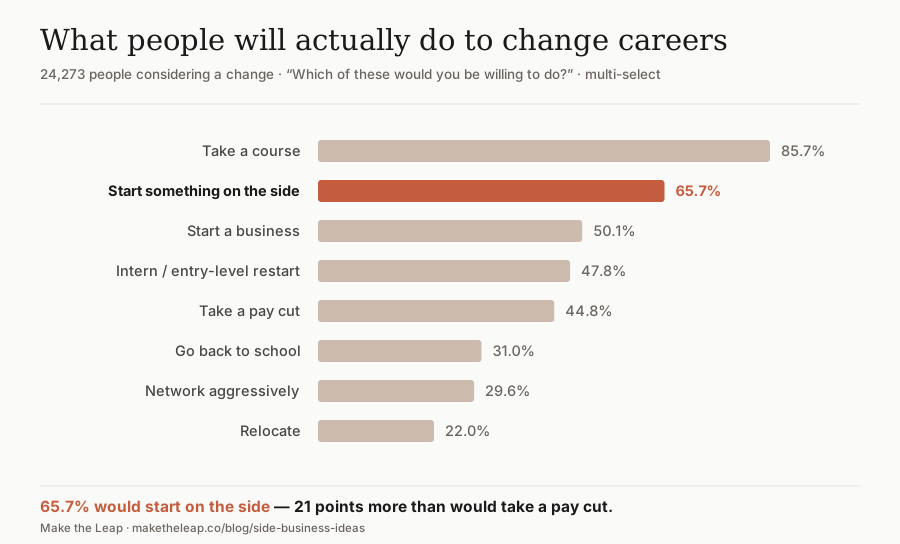
The side build isn't a hustle-culture fad in this data - it's the risk-management strategy of people with mortgages and dependents. It's also remarkably stable across career stages: 56.1% of assessments from people with 0-5 years of experience say they'd start something on the side, rising to 67.8% at 21-30 years. The 25-year veteran and the five-year associate converge on the same answer: keep the income, build alongside it.
The willingness-to-start gap: 85.2% haven't started
Here's the finding that reframes the whole topic. Among the 15,950 assessments that say they'd start something on the side, we also know where their venture actually stands:
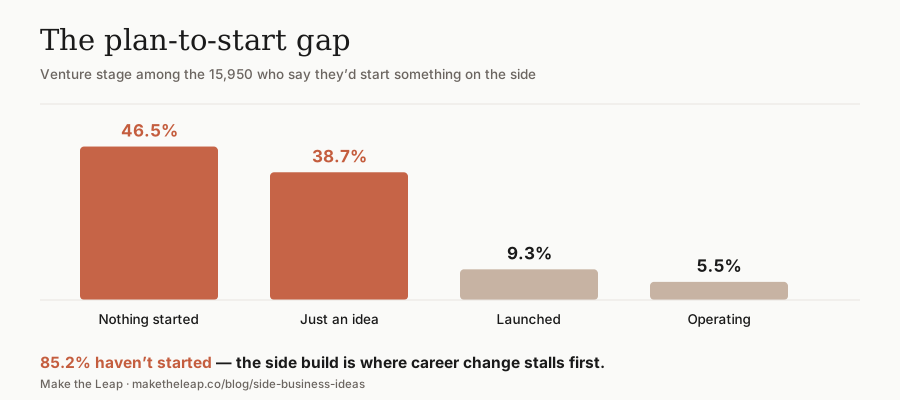
46.5% have nothing started. 38.7% have only an idea. 9.3% have launched, and 5.5% are operating. For the side business, there's a wide gap between willingness and follow-through - which matches everything else we've measured about how long people deliberate (see the 71%-thinking-for-over-a-year study). This data can't tell us why the gap exists, but our working theory is that it isn't effort or courage - it's specificity: “start something” is unstartable, while a named build with a first client profile is a to-do list.
The side businesses people actually get matched to
This is the part no listicle can copy. When our engine generates three career paths for a real person, some come back as explicit side-first builds - 5,296 of the 72,774 paths in the corpus (7.3%). Here are the builds that recur most, with the median year-one starting range real users were shown, and the 3-5 year ceiling:
| Matched side build | Matches | Year 1 | Years 3-5 |
|---|---|---|---|
| Workshop facilitator | 19× | $15K-$30K | $55K-$95K |
| Life coach | 17× | $12K-$30K | $60K-$90K |
| Operations consultant | 16× | $30K-$55K | $100K-$150K |
| Bookkeeper | 13× | $15K-$30K | $60K-$85K |
| Creative workshop facilitator | 13× | $15K-$25K | $55K-$85K |
| Digital product creator | 12× | $12K-$25K | $55K-$100K |
| Executive coach | 12× | $40K-$65K | $130K-$200K |
| Health and wellness coach | 10× | $15K-$30K | $75K-$120K |
| Career coach | 10× | $15K-$35K | $70K-$120K |
| Professional organizer | 9× | $15K-$30K | $55K-$85K |
| Small business operations consultant | 8× | $35K-$60K | $100K-$150K |
| Grant writer | 7× | $25K-$45K | $75K-$110K |
| Event producer | 7× | $30K-$55K | $95K-$150K |
| Book editor | 7× | $15K-$30K | $60K-$85K |
| Travel advisor | 7× | $15K-$35K | $60K-$95K |
Three things to notice. First, none of these are gig apps. The engine matches people to client businesses built on skills they already have - facilitation, coaching, consulting, bookkeeping, editing - because those compound into the career change itself, where gig work just adds hours. Second, the coaching family (life, executive, career, health, leadership) dominates the list, and its best-paying member - executive coaching at $40K-$65K in year one - goes to people with genuine leadership history. Third, the year-one numbers are deliberately unglamorous. $12K-$30K is what our engine projects a real first year of a real side build to look like next to a full-time job. The ceilings - $55K to $200K by years three to five - are where the leverage lives, and the honest sequence is the whole point: side income first, main income when the math says so.
Considering a consulting or advisory offer? Use the free consulting-rate and client-load calculator to work through your compensation goal, business costs and available billable hours. It shows the rate your assumptions require, not what clients will pay, and an optional retainer count does not prove the workload fits.
How to actually close the gap
If you're in the 85% - willing, not started - our working theory is that the fix isn't motivation, it's a name. A specific build, matched to your actual experience and income reality, with an honest year-one number attached. That's what our free assessment does: three named paths, and when a side build fits your situation, it comes with the starting range and ceiling for your version of it. If the build you have in mind is selling your own expertise, the step-by-step version - what to sell, who pays, how to price it and test it without quitting - is in how to become a consultant while you're still employed. For the salaried-path version of this study, see the work-from-home careers people actually match to, and for why the deliberation stretches on, the career change statistics study covers the full picture.
FAQ
What's the best side business to start while working full time?
In our matching data, the answer depends on what you already do well - but the side builds most often matched to real career changers are workshop facilitation, coaching (life, executive, career, health), operations consulting, bookkeeping, and digital products. The highest-paying frequent match is executive coaching ($40K-$65K in year one for people with real leadership history, with a $130K-$200K ceiling at years 3-5), and the steadiest is operations consulting ($30K-$55K year one), because it sells skills the person already uses at work. The pattern across all of them: the good side business is the one your existing experience already qualifies you for.
How much does a side business make in the first year?
Less than the internet tells you, and we'd rather be the ones who say so. Across 5,296 side-first and venture paths our engine generated, typical year-one starting ranges run $12K-$30K for coaching, facilitation, and creative builds, $15K-$30K for bookkeeping and organizing, and $30K-$65K for consulting builds that sell an existing professional skill. The 3-5 year ceilings are a different story - $55K to $200K depending on the build - but year one is a part-time income, not a salary replacement. That is exactly why two-thirds of career changers say they'd start on the side rather than jump.
Side hustle, side business, or second job - what's the difference?
A second job trades more hours for a wage (evenings at a wage rate, capped by your energy). A side hustle usually means gig work - delivery, tasks, reselling - income that stops the moment you stop. A side business builds an asset: clients, a reputation, rates you set, and the option to become the main thing. Our data is about the third kind, because that's what career changers say they're willing to do: 65.7% of 24,273 say they'd start something on the side, and the paths they get matched to are client businesses built on existing skills, not gig apps.
Should I quit my job before starting a business?
Our data overwhelmingly answers no - 65.7% of assessments say they'd start on the side while only 44.8% would take a pay cut, a 21-point gap that says keep the income, build alongside it. Our own path staging agrees: nearly every venture path our engine generates is explicitly side-first, with year-one ranges ($12K-$65K) that assume you still have a salary. The quit moment comes when the side income and the runway math say so, not on day one.
Why do most side businesses never get started?
Among the 15,950 assessments in our sample that say they'd start something on the side, 46.5% have nothing started and 38.7% have only an idea - 85.2% pre-start. Only 9.3% have launched and 5.5% are operating. We don't have data on what causes the stall, but our working theory is that a vague intention ('start something') is harder to act on than a named build ('start a bookkeeping practice for the trades companies you already know'). That theory is why our assessment names three concrete paths instead of giving a personality type.
What side business can I start with my existing skills?
That's the question our free assessment answers directly: it reads your actual experience, constraints, and income floor, and returns three named paths - and when a side build fits, it comes with a year-one range and a 3-5 year ceiling for your situation, not a generic list. Every number in this article came out of that engine. We build it, so weigh the bias; the result is free and takes about 10 minutes.
Get your build named
30 questions about your actual situation - experience, constraints, income floor - and you get three named paths with real starting ranges. When a side build fits, it's specific enough to start. Free, about 10 minutes.
Take the free assessment
Written by Jon Miksis - entrepreneur, retreat facilitator, and founder of Make the Leap. Jon has facilitated 6 immersive retreat experiences, attended 18 retreats across four continents, and spent 5+ years researching why smart, capable people stay stuck. He's traveled to 73 countries and invested over $120,000 in personal development. Guides on this site are built from Make the Leap's assessment data and reviewed by Jon; the methodology and its limits are published here.